
What Is Price Action Trading and Why It Matters
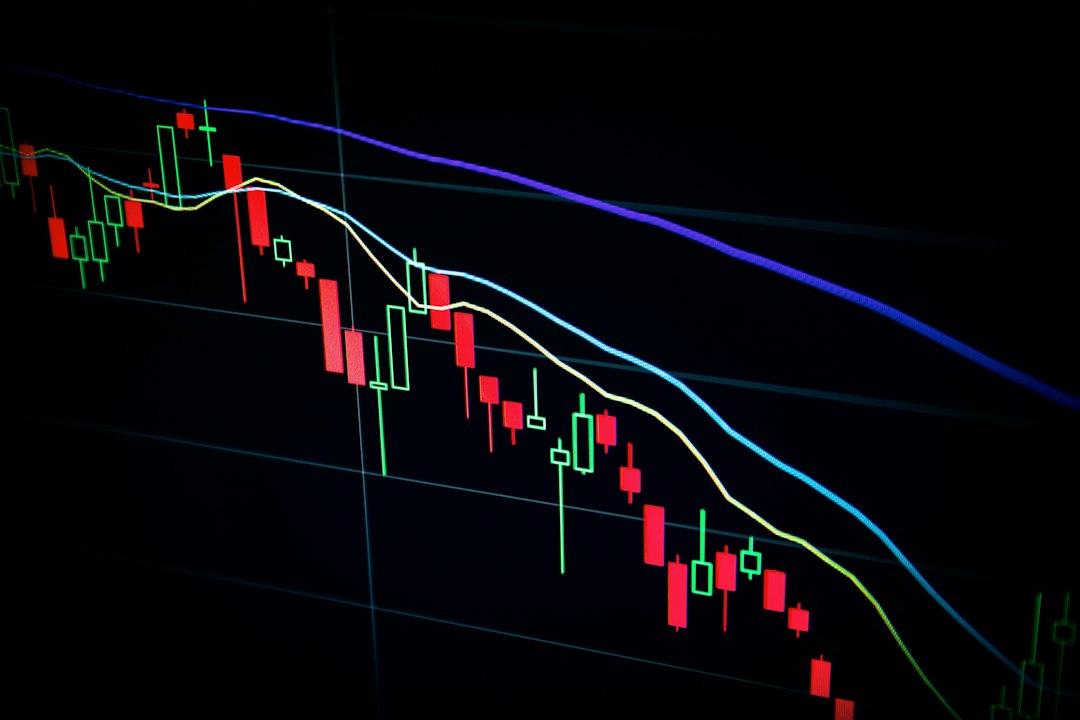
Price action trading is one of the most fundamental approaches to market analysis, yet many traders overlook its power. Instead of relying on lagging indicators, price action focuses on raw price movements to make trading decisions. This method teaches you to read the market's language directly from the charts. In this guide, you'll discover what price action trading is, why professional traders swear by it, and how you can apply it to improve your Forex trading results.
Understanding Price Action Trading Fundamentals
Price action trading is a methodology that analyzes historical and current price movements to identify trading opportunities. Unlike indicator-based strategies that overlay mathematical calculations on charts, price action focuses exclusively on candlestick patterns, chart patterns, support and resistance levels, and trend analysis. This approach assumes that all fundamental and market sentiment information is already reflected in the price. Traders who master price action can make decisions based on what the market is actually doing, rather than what indicators suggest it might do.
The core principle behind price action is simple: price movements create patterns that tend to repeat over time. These patterns emerge from consistent human behavior in response to market conditions. By learning to recognize these patterns, traders can anticipate potential market moves with reasonable accuracy. Price action works across all timeframes and markets, making it a versatile tool for day traders, swing traders, and position traders alike.
Key Components of Price Action Analysis
Successful price action trading relies on several essential elements working together. Candlestick patterns form the foundation, with formations like pin bars, engulfing candles, and inside bars signaling potential reversals or continuations. Support and resistance zones mark psychological price levels where buying or selling pressure tends to emerge. Understanding market structure—higher highs and higher lows in uptrends, lower highs and lower lows in downtrends—helps traders align with the dominant direction.
Chart patterns such as double tops, head and shoulders, and triangles provide larger context for potential breakouts or reversals. Price rejection, shown by long wicks on candlesticks, indicates that a price level was tested but ultimately rejected by the market. Here's how price action compares to indicator-based trading:
| Aspect | Price Action Trading | Indicator-Based Trading |
|---|---|---|
| Signal Source | Raw price movements | Mathematical calculations |
| Response Time | Real-time market reading | Lagging signals |
| Chart Clarity | Clean, uncluttered charts | Multiple overlays |
| Learning Curve | Pattern recognition skills | Indicator settings knowledge |
Why Price Action Matters for Forex Traders
Price action trading offers distinct advantages in the Forex market. First, it works in all market conditions—trending, ranging, or volatile. You're not dependent on specific indicator settings that may become obsolete when market dynamics change. Second, price action teaches you to think like institutional traders. Banks and hedge funds don't rely on standard retail indicators; they watch order flow and price behavior at key levels.
Third, price action naturally incorporates risk management. By identifying clear support and resistance zones, you can place tight stop-losses below key levels while targeting logical profit areas. This improves your risk-reward ratios significantly. Fourth, price action works synergistically with automated trading systems. Many successful Forex bots incorporate price action rules into their algorithms, recognizing patterns that human traders would manually identify. This makes price action knowledge essential even for traders interested in automation.
Implementing Price Action in Your Trading Strategy
Starting with price action requires a systematic approach. Begin by simplifying your charts—remove all indicators except perhaps one or two key moving averages for trend context. Focus on learning three to five reliable candlestick patterns and practice identifying them in historical data. Mark significant support and resistance levels on your charts weekly, noting where price has reversed multiple times.
Develop a trading plan that specifies which patterns you'll trade, at which timeframes, and under what market conditions. For example, you might decide to only trade pin bar reversals at major support/resistance zones on the 4-hour chart. Combine price action with proper position sizing—never risk more than 1-2% of your account per trade. Keep a trading journal documenting each price action setup, including screenshots, your reasoning, and the outcome. Review this journal weekly to identify which patterns work best for your trading style.
Common Mistakes to Avoid in Price Action Trading
New price action traders often fall into predictable traps. Overcomplicating analysis by trying to see patterns everywhere leads to analysis paralysis and poor entries. Not all candlestick formations are significant—context matters tremendously. Trading against the overall trend because you spotted a single reversal pattern is another frequent error. Price action works best when aligned with the bigger picture.
Ignoring the importance of confluence is costly. A pin bar at a random price point carries far less weight than one forming at a major resistance level that aligns with a Fibonacci retracement. Finally, failing to adapt position sizes based on the strength of the setup results in uneven risk management. Stronger confluence setups justify slightly larger positions, while weaker setups require reduced risk exposure. Remember that price action is about probability, not certainty—no pattern wins 100% of the time.
Price action trading provides a timeless framework for understanding market behavior in Forex and beyond. By focusing on what price is actually doing rather than derivative indicators, you gain clarity and confidence in your trading decisions. Whether you trade manually or develop automated systems, mastering price action gives you an edge in reading market sentiment and identifying high-probability opportunities. Start with the basics, practice consistently, and you'll develop the pattern recognition skills that separate successful traders from the crowd.